Chemistry
72 playlists · 3507 videos
What in Chemistry?
Everything in Chemistry
-

 25:16
6
25:16
6
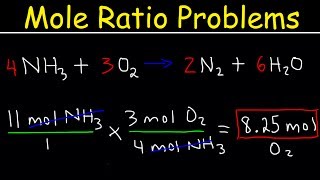
- 1 Stoichiometry Basic Introduction, Mole to Mole, Grams to Grams, Mole Ratio Practice Problems 25:16
- 2 Stoichiometry Mole to Mole Conversions – Molar Ratio Practice Problems 12:11
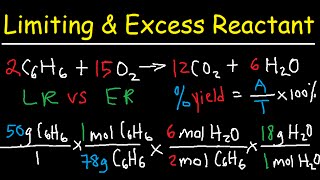
- 3 Stoichiometry – Limiting & Excess Reactant, Theoretical & Percent Yield – Chemistry 20:12
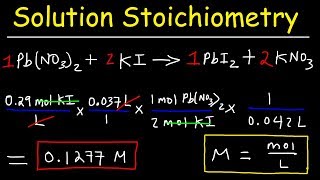
- 4 Solution Stoichiometry – Finding Molarity, Mass & Volume 23:11
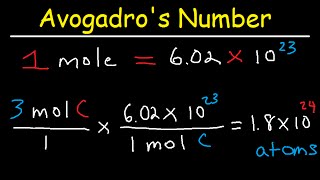
- 5 Avogadro’s Number, The Mole, Grams, Atoms, Molar Mass Calculations – Introduction 17:59
-

 14:13
15
14:13
15
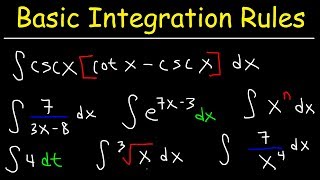
- 1 Basic Integration Problems 14:13
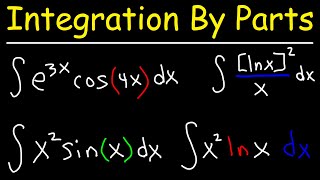
- 2 Integration By Parts 32:52
- 3 Calculus 1 – Integration & Antiderivatives 40:04
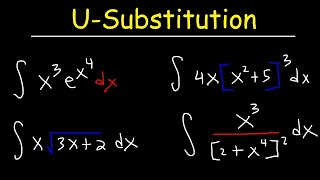
- 4 How To Integrate Using U-Substitution 21:35
- 5 Integration of Rational Functions into Logarithms By Substitution & Long Division 19:20
-


 1:51
47
1:51
47
- 1 Crash Course Chemistry Preview! 1:51
- 2 The Nucleus: Crash Course Chemistry #1 10:12
- 3 Unit Conversion & Significant Figures: Crash Course Chemistry #2 11:24
- 4 The Creation of Chemistry – The Fundamental Laws: Crash Course Chemistry #3 10:59
- 5 The Periodic Table: Crash Course Chemistry #4 11:22
-


 11:27
15
11:27
15
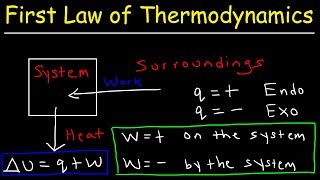
- 1 First Law of Thermodynamics, Basic Introduction – Internal Energy, Heat and Work – Chemistry 11:27
- 2 Internal Energy, Heat, and Work Thermodynamics, Pressure & Volume, Chemistry Problems 23:29
- 3 Thermochemical Equations 12:47
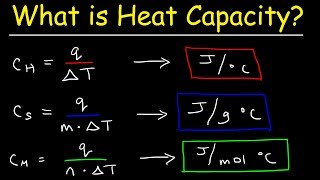
- 4 What Is The Difference Between Specific Heat Capacity, Heat Capacity, and Molar Heat Capacity 12:29
- 5 How To Solve Basic Calorimetry Problems in Chemistry 10:25
-


 22:54
33
22:54
33
- 1 Biochemistry | Michaelis-Menten Equation 22:54
- 2 Biochemistry | Enzyme Inhibition 32:35
- 3 Biochemistry | Michaelis-Menten & Lineweaver-Burk Plot 22:15
- 4 Metabolism | Glycolysis 34:33
- 5 Metabolism | Regulation of Glycolysis 29:17
-



 3:27
18
3:27
18
- 1 GCSE Chemistry Revision “Reaction of Metals with Oxygen” 3:27
- 2 GCSE Chemistry Revision “The Reactivity Series” 4:34
- 3 GCSE Chemistry Revision “Extraction of Metals” 4:14
- 4 GCSE Chemistry Revision “Oxidation and Reduction in Terms of Electrons” 4:00
- 5 GCSE Chemistry Revision “Acids and Alkalis” 4:47
-


 56:46
101
56:46
101
- 1 Introduction to Statistics 56:46
- 2 Descriptive Statistics vs Inferential Statistics 7:20
- 3 Qualitative and Quantitative 6:28
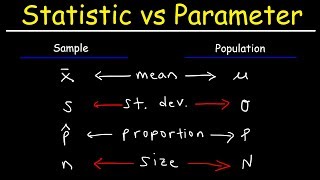
- 4 Statistic vs Parameter & Population vs Sample 6:22
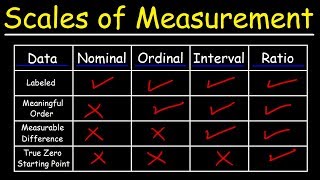
- 5 Scales of Measurement – Nominal, Ordinal, Interval, & Ratio Scale Data 11:09
-


 4:44
23
4:44
23
- 1 Introduction to Biochemistry 4:44
- 2 Amino Acids 5:04
- 3 Protein Structure 10:50
- 4 Enzymes: Nature’s Factory Workers 7:17
- 5 Carbohydrates Part 1: Simple Sugars and Fischer Projections 8:59
-


 52:09
200
52:09
200
- 1 Chemistry 52:09
- 2 Math and Science YouTube Video Tutorials for Online College and High School Students 1:07
- 3 Converting Units With Conversion Factors – Metric System Review & Dimensional Analysis 38:41
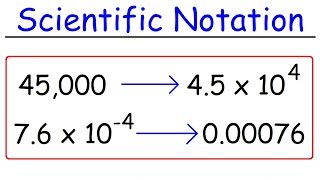
- 4 Scientific Notation – Fast Review! 12:21
- 5 Scientific Notation – Basic Introduction 42:31
-


 15:33
11
15:33
11
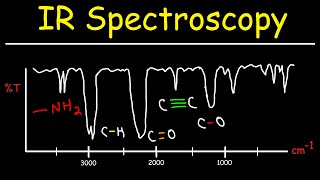
- 1 IR Spectroscopy – Basic Introduction 15:33
- 2 IR Spectroscopy – Practice Problems 11:47
- 3 Basic Introduction to NMR Spectroscopy 11:40
- 4 Shielding and Deshielding – H NMR Spectroscopy 11:49
- 5 How To Determine The Number of Signals In a H NMR Spectrum 20:26
-


 59:02
200
59:02
200
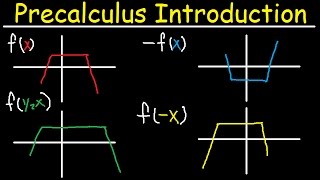
- 1 Precalculus Introduction, Basic Overview, Graphing Parent Functions, Transformations, Domain & Range 59:02
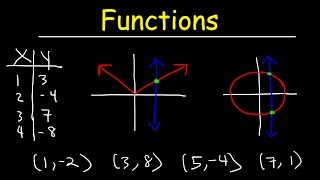
- 2 Functions – Vertical Line Test, Ordered Pairs, Tables, Domain and Range 10:54
- 3 What Is a Function? | Precalculus 11:06
- 4 Evaluating Functions – Basic Introduction | Algebra 11:49
- 5 Evaluating Piecewise Functions | PreCalculus 5:47
-


 2:22
83
2:22
83
- 1 Introduction to Chemistry 2:22
- 2 Types of Matter: Elements, Compounds, and Mixtures 4:15
- 3 Measurement and Significant Figures 3:39
- 4 Scientific Notation and Dimensional Analysis 5:13
- 5 History of Atomic Theory 4:26
-


 3:14
8
3:14
8
- 1 GCSE Chemistry Revision “Purity and Formulations” 3:14
- 2 GCSE Chemistry Revision “Chromatography” 5:04
- 3 GCSE Chemistry Revision “Required Practical 6: Chromatography” 4:36
- 4 GCSE Chemistry Revision “Testing for Gases” 2:26
- 5 GCSE Chemistry Revision “Flame Tests” (Triple) 3:56
-


 5:22
10
5:22
10
- 1 Protein Structure – Primary, Secondary, Tertiary, & Quarternary – Biology 5:22
- 2 Macromolecules Review 1:01:35
- 3 Photosynthesis – Light Dependent Reactions and the Calvin Cycle 17:46
- 4 Lipids – Fatty Acids, Triglycerides, Phospholipids, Terpenes, Waxes, Eicosanoids 17:04
- 5 Introduction to Amino Acids 11:34
-


 41:56
177
41:56
177
- 1 Organic Chemistry – Basic Introduction 41:56
- 2 Ionic Bonds, Polar Covalent Bonds, and Nonpolar Covalent Bonds 11:00
- 3 Which Bond Is More Polar? 10:35
- 4 Electrostatic Potential Maps and Bond Polarity – Organic Chemistry 25:28
- 5 Organic Chemistry – How To Draw Lewis Structures 11:55
-


 15:11
8
15:11
8
- 1 Molecular and empirical formulas | Physical Processes | MCAT | Khan Academy 15:11
- 2 The mole and Avogadro’s number | Atoms, compounds, and ions | Chemistry | Khan Academy 9:44
- 3 Formula from Mass Composition 12:58
- 4 Balancing Chemical Equations 14:28
- 5 Stoichiometry | Physical Processes | MCAT | Khan Academy 9:24
-



 9:56
11
9:56
11
- 1 Stoichiometry | Chemical reactions and stoichiometry | Chemistry | Khan Academy 9:56
- 2 Stoichiometry – Chemistry for Massive Creatures: Crash Course Chemistry #6 12:47
- 3 Stoichiometry 7:49
- 4 Stoichiometry (Mol Ratio Conversions) – Conversions Using Balanced Equations – Chemistry Tutorial 7:06
- 5 Percent Yield 5:17
-


 1:07:01
5
1:07:01
5
- 1 The Language of Chemistry 1:07:01
- 2 Types of Chemical Reactions 20:53
- 3 Balancing Equations Made Easy 37:12
- 4 Balancing Equations: ABCD Method 33:20
- 5 Chemical Equations Revision 46:40
-


 20:41
18
20:41
18
- 1 AutoCAD Tutorial for Beginners – 1 20:41
- 2 AutoCAD Drawing Tutorial for Beginners – 1 13:51
- 3 AutoCAD Tutorial for Beginners – 2 22:06
- 4 AutoCAD Drawing Tutorial for Beginners – 2 12:01
- 5 AutoCAD Tutorial for Beginners – 3 27:29
-


 6:55
7
6:55
7
- 1 Stoichiometry Made Easy: Stoichiometry Tutorial Part 1 6:55
- 2 Stoichiometry with Mass: Stoichiometry Tutorial Part 2 8:43
- 3 Stoichiometry Tricks 6:54
- 4 Percent Yield Made Easy: Stoichiometry Tutorial Part 4 7:45
- 5 Limiting Reagent Made Easy: Stoichiometry Tutorial Part 5 8:10
-



 16:07
54
16:07
54
- 1 Properties of Water and Hydrophobic Effect 16:07
- 2 Properties of Water and Hydrophobic Effect (Part II) 0:42
- 3 Intramolecular and Intermolecular Forces 16:06
- 4 Intramolecular and Intermolecular Forces (Part II) 1:59
- 5 First and Second Law of Thermodynamics 14:03
-


 7:49
78
7:49
78
- 1 Atoms & Ions | Protons, Neutrons, Electrons 7:49
- 2 GCSE Chemistry – Elements, Isotopes & Relative Atomic Mass (2026/27 exams) 7:23
- 3 GCSE Chemistry – Compounds, Molecules & Mixtures (2026/27 exams) 6:21
- 4 GCSE Chemistry – Balancing Equations | Writing Word & Symbol Equations (2026/27 exams) 6:24
- 5 GCSE Chemistry – Separation Techniques – Filtration | Evaporation | Crystallisation 5:19
-


 4:19
12
4:19
12
- 1 Introduction to Chemistry Laboratory Techniques 4:19
- 2 Common Scientific Glassware and the Undergraduate Chemistry Laboratory 16:22
- 3 Gravity Filtration and Vacuum Filtration 10:14
- 4 Liquid-Liquid Extraction 10:57
- 5 Simple Distillation 9:35
-



 3:34
51
3:34
51
- 1 Crash Course Organic Chemistry Preview 3:34
- 2 What Is Organic Chemistry?: Crash Course Organic Chemistry #1 10:16
- 3 The Basics of Organic Nomenclature: Crash Course Organic Chemistry #2 12:48
- 4 More Organic Nomenclature: Heteroatom Functional Groups: Crash Course Organic Chemistry #3 12:24
- 5 3D Structure and Bonding: Crash Course Organic Chemistry #4 14:33
-
16:07
200
- 1 Properties of Water and Hydrophobic Effect 16:07
- 2 Properties of Water and Hydrophobic Effect (Part II) 0:42
- 3 Intramolecular and Intermolecular Forces 16:06
- 4 Intramolecular and Intermolecular Forces (Part II) 1:59
- 5 First and Second Law of Thermodynamics 14:03
-


 8:01
119
8:01
119
- 1 IUPAC Nomenclature of Alkanes: Part 1 8:01
- 2 IUPAC Nomenclature of Alkanes: Part 2 7:22
- 3 IUPAC Nomenclature of Haloalkanes and Alcohols 6:12
- 4 IUPAC Nomenclature of Alkenes and Alkynes 7:44
- 5 IUPAC Nomenclature of Cyclic Compounds 6:48
-



 29:39
9
29:39
9
- 1 AQA A-Level Chemistry – Periodicity 29:39
- 2 AQA A-Level Chemistry – The Alkaline Earth Metals (Gp. 2) 15:15
- 3 AQA A-Level Chemistry – The Halogens (Gp. 7) 40:35
- 4 AQA A-Level Chemistry – Catalysis 24:59
- 5 AQA A-Level Chemistry – Introduction to Aqueous Ion Reactions 20:58
-



 21:19
35
21:19
35
- 1 1. The Importance of Chemical Principles 21:19
- 2 2. Atomic Structure 39:00
- 3 3. Wave-Particle Duality of Light 45:52
- 4 4. Wave-Particle Duality of Matter; Schrödinger Equation 46:03
- 5 5. Hydrogen Atom Energy Levels 41:39
-


 45:32
14
45:32
14
- 1 Organic Formulae & Homologous Series | A level 45:32
- 2 Naming Organic Compounds Explained | A Level Chemistry IUPAC Nomenclature Masterclass 55:38
- 3 Isomerism Explained | A Level Chemistry Structural and Stereoisomer Masterclass 47:13
- 4 Alkanes Explained | A Level Chemistry Organic Chemistry Masterclass 52:34
- 5 Free-radical Substitution | A level Chemistry 35:20
-



 3:45
37
3:45
37
- 1 A Level Chemistry “Functional Groups and Homologous Series” 3:45
- 2 A Level Chemistry Revision “Naming Unbranched Hydrocarbons” 4:37
- 3 A Level Chemistry Revision “Naming Branched Chain Hydrocarbons” 5:22
- 4 A Level Chemistry Revision “Molecular Formula and Empirical Formula” 5:25
- 5 A Level Chemistry Revision “Displayed Formula, Structural Formula and Skeletal Formula” 5:10
-


 13:16
17
13:16
17
- 1 Volumetric Techniques | MIT Digital Lab Techniques Manual 13:16
- 2 Titration | MIT Digital Lab Techniques Manual 9:11
- 3 TLC-The Basics | MIT Digital Lab Techniques Manual 16:03
- 4 TLC-Advanced | MIT Digital Lab Techniques Manual 9:42
- 5 Reaction Work-Up I | MIT Digital Lab Techniques Manual 18:13
-

 38:46
35
38:46
35
- 1 1. Introduction, Course Organization of MIT 7.016 Introductory Biology, Fall 2018 38:46
- 2 2. Chemical Bonding and Molecular Interactions; Lipids and Membranes 49:08
- 3 3. Structures of Amino Acids, Peptides, and Proteins 51:40
- 4 4. Enzymes & Metabolism 49:11
- 5 5. Carbohydrates and Glycoproteins 49:20
-


 24:19
168
24:19
168
- 1 Drawing Lewis Structures | 1.1 Organic Chemistry 24:19
- 2 Formal Charge | 1.2 Organic Chemistry 7:08
- 3 Valence Bond Theory & Hybridization | 1.3 Organic Chemistry 26:04
- 4 Molecular Orbital Theory | 1.4 Organic Chemistry 22:47
- 5 Polarity | Polar vs Nonpolar | 1.5 Organic Chemistry 12:58
-



 26:39
96
26:39
96
- 1 Matter: Elements, Compounds & Mixtures | 1.1 General Chemistry 26:39
- 2 Scientific Notation & Significant Figures | 1.2 General Chemistry 22:43
- 3 Unit Conversion | Metric System & SI Units | 1.3 General Chemistry 31:27
- 4 Atomic Theory & Atomic Structure | 2.1 General Chemistry 29:20
- 5 Naming Ionic Compounds | 2.2 General Chemistry 18:49
-



 1:11:08
5
1:11:08
5
- 1 Stoichiometry Tutorial. How to solve stoichiometry questions 1:11:08
- 2 Stoichiometry Tutorial. How to solve stoichiometry question on limiting and excess reactants 58:38
- 3 Stoichiometry Basic Introduction, Mole to Mole, Grams to Grams, Mole Ratio Practice Problems 51:55
- 4 What mass of solid calcium carbide is needed to produce 5.6dm3 of ethyne. 5:48
- 5 2026 JAMB Chemistry Likely Exam Question(Score 90+ in CHEMISTRY) 9:12
-


 16:56
103
16:56
103
- 1 An Introduction to Moles and Molar Mass – AP Chem Unit 1, Topic 1a 16:56
- 2 Molar Mass and its Applications – AP Chem Unit 1, Topic 1b 8:46
- 3 Isotopes, Atomic Mass, & Mass Spectra of Elements – AP Chem Unit 1, Topic 2 15:44
- 4 Composition of Pure Substances – AP Chem Unit 1, Topic 3 12:43
- 5 Composition of Mixtures – AP Chem, Unit 1, Topic 4 5:12
-



 57:13
200
57:13
200
- 1 Introduction to Biochemistry – Metabolism – Anabolic, Catabolic – Insulin, Glucagon – Amino Acids 57:13
- 2 Amino Acids – What is their structure? – Biochemistry Series 8:17
- 3 Amino Acids (Part 2) | Classification | Biochemistry MCAT 10:23
- 4 Amino Acids – pH & pKa – Titration – Part 3 – Biochemistry for MCAT, DAT, NEET, GCSE 13:30
- 5 Titration of Amino Acids – pH, pKa1 and pKa2 – Isoelectric Point- Amino Acids (Part 4) 18:16
-



 14:05
55
14:05
55
- 1 Spectrophotometric Determination of Iron 14:05
- 2 Chemical Kinetics Part 1 14:53
- 3 Acid-Base Titration Curves 13:13
- 4 Calorimetry 14:33
- 5 Chemical Kinetics Part 2 5:44
-


 39:59
27
39:59
27
- 1 Atomic Structure | A Level Chemistry 39:59
- 2 Mass Spectrometer & Isotopes | A Level Chemistry 51:32
- 3 Relative atomic and molecular masses, the mole and the Avogadro constant | A level Chemistry 23:44
- 4 Balanced Symbol & Ionic Equations | A level Chemistry 34:41
- 5 Ideal Gas Equation Explained | A Level Chemistry Amount of Substance Masterclass 24:21
-


 24:32
9
24:32
9
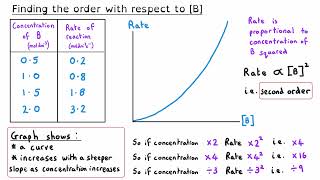
- 1 Buffer Solutions Explained | A Level Chemistry Acids and Bases Masterclass 24:32
- 2 Acids and Bases Explained | A Level Chemistry Physical Chemistry Masterclass (Part 1 of 3) 40:09
- 3 Acids and Bases Explained | A Level Chemistry Physical Chemistry Masterclass (Part 2 of 3) 28:36
- 4 Acids, Bases and Buffers | Full Topic | A level Chemistry Masterclass 1:32:54
- 5 Rate Equations Ultimate Guide | A-Level Chemistry Masterclass 59:10
-



 5:31
41
5:31
41
- 1 Introduction to Inorganic and Organometallic Chemistry 5:31
- 2 Periodic Table Part 1: Hydrogen 11:04
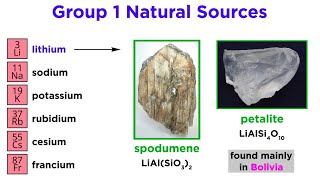
- 3 Periodic Table Part 2: Alkali Metals (Li, Na, K, Rb, Cs, Fr) 9:48
- 4 Periodic Table Part 3: Alkaline Earth Metals (Be, Mg, Ca, Sr, Ba, Ra) 8:49
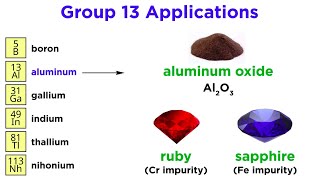
- 5 Periodic Table Part 4: Boron Group (B, Al, Ga, In, Tl, Nh) 9:57
-


 48:09
20
48:09
20
- 1 Introduction to Chemical Engineering | Lecture 1 48:09
- 2 Introduction to Chemical Engineering | Lecture 2 45:20
- 3 Introduction to Chemical Engineering | Lecture 3 53:58
- 4 Introduction to Chemical Engineering | Lecture 4 50:44
- 5 Introduction to Chemical Engineering | Lecture 5 51:16
-


 6:30
160
6:30
160
- 1 Quantum Chemistry 0.1 – Introduction 6:30
- 2 Quantum Chemistry 1.1 – Blackbody Radiation 6:24
- 3 Quantum Chemistry 1.2 – Photoelectric Effect 5:34
- 4 Quantum Chemistry 1.3 – Rydberg Formula 6:26
- 5 Quantum Chemistry 1.4 – Bohr Hydrogen Model 1: Radius 8:57
-


 9:22
37
9:22
37
- 1 Top 6 Steps to Run The PERFECT Column Chromatography 9:22
- 2 How To Use A Pipette (Micropipette) #Science 2:18
- 3 How to Use a Disposable GLASS Pipette #SCIENCE 2:21
- 4 How To Use GLOVES In the LAB 3:16
- 5 DON’T do THIS with a separatory funnel 1:54
-


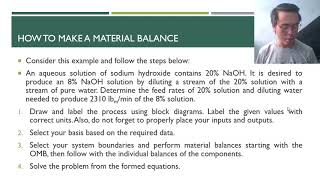

 1:00:04
15
1:00:04
15
- 1 Lesson 1 A review of the fundamentals 1:00:04
- 2 Lesson 2 Process and process variables 47:15
- 3 Lesson 3 Introduction to material balances 47:52
- 4 Lesson 4 The basic process units and their material balances 1:31:18
- 5 Solutions to Exam 1 CH125P 29:50
-


 11:57
63
11:57
63
- 1 Introduction to Physical Chemistry | Physical Chemistry I | 001 11:57
- 2 Differential Calculus | Physical Chemistry I | 002 11:21
- 3 Integral Calculus | Physical Chemistry I | 003 14:26
- 4 Geometric Properties of Derivatives | Physical Chemistry I | 004 9:51
- 5 Total Differentials | Physical Chemistry I | 005 8:40
-


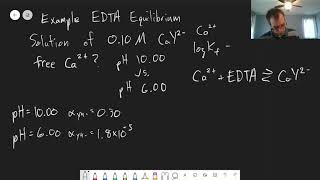
 3:00
9
3:00
9
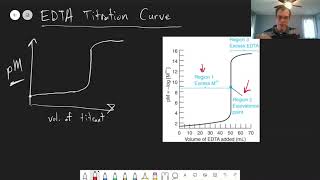
- 1 Chapter 12: EDTA Introduction | CHM 214 | 117 3:00
- 2 Chapter 12: Properties of EDTA | CHM 214 | 118 6:13
- 3 Chapter 12: EDTA Complex Formation Constants | CHM 214 | 119 7:05
- 4 Chapter 12: EDTA Equilibrium Example | CHM 214 | 120 5:28
- 5 Chapter 12: EDTA Titration Curves | CHM 214 | 121 3:19
-


 3:25
6
3:25
6
- 1 Chapter 8: Intro to Activities | CHM 214 | 075 3:25
- 2 Chapter 8: Ionic Strength | CHM 214 | 076 5:06
- 3 Chapter 8: Activity Coefficients | CHM 214 | 077 3:47
- 4 Chapter 8: Debye Huckel Equation | CHM 214 | 078 6:16
- 5 Chapter 8: Activities for Neutral Species | CHM 214 | 079 2:54
-

 1:11:08
9
1:11:08
9
- 1 Stoichiometry Tutorial. How to solve stoichiometry questions 1:11:08
- 2 Stoichiometry Basic Introduction, Mole to Mole, Grams to Grams, Mole Ratio Practice Problems 51:55
- 3 Stoichiometry Tutorial. How to solve stoichiometry question on limiting and excess reactants 58:38
- 4 How to Solve Empirical Formula Calculations when Percentage Data is Given(Get 90+ in Your Chemistry) 12:39
- 5 Empirical Formula Calculations when Mass(g) is Given 8:05
-


 35:29
7
35:29
7
- 1 Transition Metals | Ultimate Guide Part 1 | Complexes, Isomerism & Substitution | A Level Chemistry 35:29
- 2 Transition Metals | Colour & Complex Ions Explained | Ultimate Guide Part 2 12:15
- 3 Transition Metals | Variable Oxidation States & Redox Titrations | Ultimate Guide Part 3 17:25
- 4 Transition Metals | Catalysts | Homogeneous, Heterogeneous and Autocatalysis | Ultimate Guide Part 4 23:18
- 5 Transition Metals | Ultimate Guide | Full Topic | A Level Chemistry 1:28:26
-



 7:44
9
7:44
9
- 1 Chapter 0: What is Analytical Chemistry | CHM 214 | 001 7:44
- 2 Chapter 1: SI unit review | CHM 214 | 002 3:52
- 3 Chapter 1: SI prefixes | CHM 214 | 003 3:32
- 4 Chapter 1: Unit Conversions | CHM 214 | 004 4:55
- 5 Chapter 1: Molarity and Molality | CHM 214 | 005 4:54
-


 1:24
20
1:24
20
- 1 Aspen HYSYS – Basic Course – Trailer 1:24
- 2 Welcome to the Course – HYSYS Basic Process Modeling Course (Lec01) 5:10
- 3 Why Process Modeling Simulation in HYSYS (Lec02) 11:56
- 4 Content INDEX – Aspen HYSYS (Lec03) 6:16
- 5 Course Objectives – HYSYS Basic Course (Lec04) 10:01
-



 28:22
60
28:22
60
- 1 1.1 Introduction to High School Chemistry and Matter | High School Chemistry 28:22
- 2 2.1 Significant Figures | High School Chemistry 14:37
- 3 2.2 Scientific Notation | High School Chemistry 14:10
- 4 2.3 Precision and Accuracy | High School Chemistry 3:51
- 5 2.4 Units and Conversions | High School Chemistry 42:23
-


 28:32
54
28:32
54
- 1 Atoms, Electronic Configuration 1 (Chemistry JAMB and PUTME Class) 28:32
- 2 Electronic Configuration and Valency (Chemistry JAMB and PUTME Class) 37:53
- 3 Sub-atomic particles and Nuclide Symbol (Chemistry JAMB and PUTME class) 27:41
- 4 Percentage Composition of Elements in Compounds (Chemistry JAMB and PUTME class) 21:13
- 5 Percentage Composition 8:46
-


 8:47
11
8:47
11
- 1 Period 3 Oxides | Exam Question Walkthrough 8:47
- 2 Halide Ions and Halogens | A level Chemistry | Exam Question Walkthrough 7:25
- 3 AQA | Paper 1 | 2021 | Inorganic & Physical Chemistry | A level 1:31:49
- 4 Transition Metals | Aqueous Solutions| Exam Question Walkthrough | A level Chemistry 17:28
- 5 Group 7 | Halogens | A level Chemistry | Question Walkthrough 18:21
-


 2:42
40
2:42
40
- 1 Petroleum Refining – Complete Guide to Products & Processes (Trailer) 2:42
- 2 Welcome to the Course! (Lecture 001) – Petroleum Refining 5:58
- 3 Content Index (Lecture 002) – Petroleum Refining 6:19
- 4 Petroleum Refining Vs Petrochemical Industry (Lecture 003) – Petroleum Refining 9:39
- 5 Course Objectives (Lecture 004) – Petroleum Refining 3:42
-


 14:58
200
14:58
200
- 1 Types of Receptors Part 1 14:58
- 2 Types of Receptors Part 2 11:43
- 3 G Protein Coupled Receptors Part 1 44:56
- 4 G Protein Coupled Receptors Part 2 39:37
- 5 G Protein Coupled Receptors Part 3 59:22
-


 14:25
12
14:25
12
- 1 STOICHIOMETRY(MOLE CONCEPT ) Lesson 1 – Relative Atomic/Molecular Mass 14:25
- 2 STOICHIOMETRY ( MOLE CONCEPT) LESSON 2 – MOLE AND MOLAR MASS 17:21
- 3 Stoichiometry( Mole Concept ) Lesson 3 – Mass to mass And Limiting reagent 36:36
- 4 STOICHIOMETRY ( MOLE CONCEPT) Lesson 4 – MOLE TO MOLE and MOLE TO MASS 31:10
- 5 STOICHIOMETRY ( MOLE CONCEPT) Lesson 5 – GAS VOLUME 16:35
-


 3:13
30
3:13
30
- 1 What is Inorganic Chemistry? 3:13
- 2 What actually is an atom? Can you define an atom? Inorganic CHEM – 1.2 4:50
- 3 Practice Questions on Fundamental Particles of an Atom! Inorganic CHEM – 1.3 8:10
- 4 Mass Number, Atomic Mass, and Isotopes Easily Explained! Inorganic CHEM – 1.8 9:46
- 5 Mass Number, Atomic Mass, and Isotopes Practice Questions!Inorganic CHEM – 1.5 11:59
-


 55:19
45
55:19
45
- 1 General Chemistry 1: Chapter 1 – Chemical Foundations Lecture (1/1) 55:19
- 2 General Chemistry 1: Chapter 1 – Chemical Foundations Problem Set 45:43
- 3 General Chemistry 1: Chapter 2 – Atoms, Molecules, and Ions Lecture (1/1) 1:39:29
- 4 General Chemistry 1: Chapter 2 – Atoms, Molecules, and Ions Problem Set 23:01
- 5 General Chemistry 1: Chapter 3 – Stoichiometry (1/2) 27:48
-



 53:41
8
53:41
8
- 1 INTRODUCTION TO ANALYTICAL CHEMISTRY: CHAPTER 1 (ANALYTICAL CHEMISTRY) 53:41
- 2 LABORATORY SAFETY AND INSTRUMENTATION: CHAPTER 2 (ANALYTICAL CHEMISTRY) 1:31:36
- 3 CHEMICAL CONCEPTS AND A BASIC APPROACH TO CHEMICAL EQUILIBRIUM: CHAPTER 3 (ANALYTICAL CHEMISTRY) 34:13
- 4 THE CHEMICAL COMPOSITION OF AQUEOUS SOLUTIONS AND EQUILIBRIUM: CHAPTER 4 (ANALYTICAL CHEMISTRY) 1:26:18
- 5 SYSTEMATIC AND RANDOM ERROR: CHAPTER 5 AND 6 (ANALYTICAL CHEMISTRY) 1:14:09
-

 1:47:33
11
1:47:33
11
- 1 Analytical Chemistry Lect-11 By Sonia Ma’am | Free Youtube Series | CSIR NET Chemical Science 1:47:33
- 2 Analytical Chemistry Lect-10 By Sonia Ma’am | Free Youtube Series | CSIR NET Chemical Science 1:57:02
- 3 Analytical Chemistry Lect-09 By Sonia Ma’am | Free Youtube Series | CSIR NET Chemical Science 1:58:45
- 4 Analytical Chemistry Lect-08 By Sonia Ma’am | Free Youtube Series | CSIR NET Chemical Science 1:54:12
- 5 Analytical Chemistry Lect-07 By Sonia Ma’am | Free Youtube Series | CSIR NET Chemical Science 1:56:25
-


 4:56
18
4:56
18
- 1 Chapter 3: The Mole | CHM 103 | 026 4:56
- 2 Chapter 3: Molar Masses | CHM 103 | 027 6:14
- 3 Chapter 3: Calculating Number of Atoms in a Diamond | CHM 103 | 028 7:10
- 4 Chapter 3: Converting Between Grams, Moles, and Particles | CHM 103 | 029 1:51
- 5 Chapter 3: Moles and Chemical Equations | CHM 103 | 030 3:24
-


 31:37
13
31:37
13
- 1 Physical Chemistry Chapter 1: Introduction 31:37
- 2 Physical Chemistry Chapter 2: Properties of Gases (1/2) 38:22
- 3 Physical Chemistry Chapter 2: Properties of Gases (2/2) 41:51
- 4 Physical Chemistry Chapter 3: The First Law of Thermodynamics (1/3) 36:55
- 5 Physical Chemistry Chapter 3: The First Law of Thermodynamics (2/3) 41:31
-



 8:10
6
8:10
6
- 1 Types of Chemical Reactions 8:10
- 2 How to Balance Chemical Equations 4:48
- 3 Balancing Chemical Equations Practice 7:16
- 4 Converting Chemical Word Equations into Standard Chemical Equations 4:27
- 5 Chemical Reactions Study Guide or Unit Test 12:54
-



 7:53
14
7:53
14
- 1 Basic Excel Stats for Chemical Engineers – Part I 7:53
- 2 Basic Excel Stats for Chemical Engineers – Part II – Run Charts 6:07
- 3 Basic Excel Stats for Chemical Engineers – Part III – Box Plots 9:19
- 4 Basic Excel Stats for Chemical Engineers – Part IV – Linear Regressions 8:39
- 5 Basic Excel Stats for Chemical Engineers – Part V – Log and Power Law Regressions 11:18
-


 6:30
8
6:30
8
- 1 Dilution and Serial Dilution | benefit and examples 6:30
- 2 Urinalysis Overview & Pre-Analytical | What and Why Urinalysis is Done | What’s in your urine? 8:25
- 3 Urinalysis Physical |What’s in your urine? 10:30
- 4 Urinalysis chemical analysis | Urine Dipstick | What’s in your urine? 17:00
- 5 Urinalysis microscopy analysis | What’s in your urine? 17:38
-


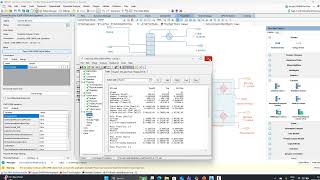 14:08
17
14:08
17
- 1 Heat Exchanger Simulation| Shell and Tube Heat Exchanger| DWSIM Simulation for Beginners 14:08
- 2 Absorption Column Simulation| Ammonia Air by Water Separation | DWSIM Simulation for Beginners 15:10
- 3 Liquid Gas Separator Simulation| Methane Water Separation | DWSIM Simulation for Beginners 9:08
- 4 Recycle Block Simulations| Complete Flowsheet| Complex Distillation | DWSIM Simulation for Beginners 6:51
- 5 Solvent Recovery Distillation Simulations| Complex Distillation | DWSIM Simulation for Beginners 17:40
-


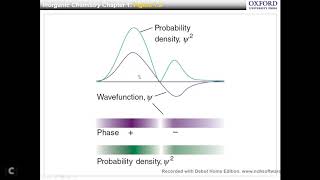
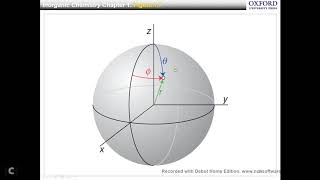
 2:07
161
2:07
161
- 1 Lecture room 147 for Chem381 and Chem350 2:07
- 2 1 1 Spectroscopic Info 7:58
- 3 1 2 Quantum Mechanics 5:50
- 4 1 3 Atomic Orbitals 30:23
- 5 1 4 Penetration and Shielding 10:45
-
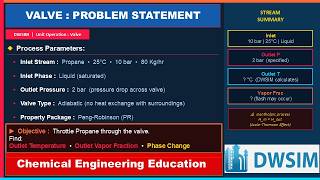


 6:11
21
6:11
21
- 1 DWSIM Valve Simulation | Joule Thomson Effect Explained | Propane Example 6:11
- 2 LPG Separation in DWSIM | Compressor Cooler Valve Flash Explained 10:30
- 3 DWSIM Splitter Simulation Explained | Ethanol Water Example | Chemical Engineering 7:19
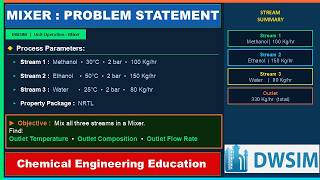
- 4 DWSIM Mixer Simulation 🔥 Methanol Ethanol Water Mixing | NRTL Explained #DWSIM 9:51
- 5 DWSIM Heat Exchanger Simulation 🔥 LMTD, Q & Area Explained #chemicalengineering 9:58
-


 7:32
51
7:32
51
- 1 Welcome to Introduction to Physical Chemistry 2 7:32
- 2 Energy and Work 27:53
- 3 Power 8:42
- 4 Friction 18:27
- 5 Drag 22:21
-


 4:06
11
4:06
11
- 1 Spectrophotometry 4:06
- 2 Technique Review: Making Solutions 3:26
- 3 Pipetting Tutorial 7:03
- 4 Logger Pro Calorimetry 4:18
- 5 Titration lab technique 11:56